Showing posts with label Lists. Show all posts
Showing posts with label Lists. Show all posts
Collective bargaining, what’s that?? Before last week, the only kinds of unions that showed up in the news were civil unions. Now, with the governor of Wisconsin calling for the end of collective bargaining for public employees of the state, signaling a move on the right towards targeting labor rights in general, unions are big news. While Democrat state senators have fled the state to avoid the quorum that Governor Scott Walker needs to pass his anti-union bill, President Obama has spoken out against the bill. Meanwhile, the Tea Party has arrived to counter the protest at Madison’s state capital building, and to up the crazy quotient in Wisconsin in general, which is usually pretty high anyways. I mean, these are people that walk around wearing cheese on their heads at all times, apparently.

We at Bareknuckle Vengeance feel the need to throw in our collective voice to this terribly complex situation. Here’s what we have to say:
1. The right to bargain collectively is a pretty good one.
2. We don’t know Walker personally, but we think he seems like kind of a dick.
Now that that’s clear, I suggest that we all watch some good pro-union films. Here are three of my favorites. Let me know of others that I missed.
Harlan County, USA
This film from the early 1970s won the Academy Award for best documentary, and its easy to see why; the filmmaker captures the entire year long strike at a Kentucky coal mine, chronicling the nasty tactics of the mining corporation and its local allies and the tremendous efforts of the miners. My favorite scene is one which a miner travels to New York City and ends up talking to a policeman on the street. The miner is shocked when the policeman tells him how great his pay and benefits are. (In Wisconsin of course, the policemen's union is safe from Walker’s plan since it endorsed him the last election. Methinks that we're not ready for democracy yet.)
 Cradle Will Rock
Tim Robbin’s masterfully written, star studded recreation of the eponymous Great Depression era agitprop play. Marc Blitzstein’s 1937 socialist musical, the first of its kind, tells the story of steel workers in Steeltown, USA who organize after World War I. Robbins weaves Blitzstein’s story in with those of Diego Rivera, Nelson Rockefeller, and Federal Theater Project director Hallie Flanagan, whose autobiography and HUAC transcripts provided much of the film’s dialog. And did I mention it has Bill Murray, Hank Azaria, Jack Black, John Cusack, Joan Cusack, Vanessa Redgrave, Cary Elwes, and John Turturro?
Matewan
One of John Sayles’ best films, and that’s saying quite a bit. Matewan depicts the “coal wars” of the 1920s in West Virginia, and he does so with a keen eye towards not only the murderous tactics of the coal company, but also by shedding light on the ways in which matters of race intersected the battle between capital and labor. The company brings in black and Italian workers via railroad, hoping to appeal to the xenophobia and bigotry of the local miners. I guess its unlikely that we will see the kind of violence depicted in Matewan show up in Madison, and thats definitely a good thing. But understanding the country's past labor battles, even if we do so through good film, might help put the right's new attacks on unions in some sort of perspective.
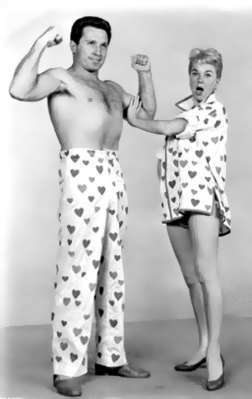
 Finally, whatever you do, don’t see Pajama Game, the 1957 Doris Day musical romantic comedy about women who strike at a pajama factory. It really sucks.

We at Bareknuckle Vengeance feel the need to throw in our collective voice to this terribly complex situation. Here’s what we have to say:
1. The right to bargain collectively is a pretty good one.
2. We don’t know Walker personally, but we think he seems like kind of a dick.
Now that that’s clear, I suggest that we all watch some good pro-union films. Here are three of my favorites. Let me know of others that I missed.
Harlan County, USA
This film from the early 1970s won the Academy Award for best documentary, and its easy to see why; the filmmaker captures the entire year long strike at a Kentucky coal mine, chronicling the nasty tactics of the mining corporation and its local allies and the tremendous efforts of the miners. My favorite scene is one which a miner travels to New York City and ends up talking to a policeman on the street. The miner is shocked when the policeman tells him how great his pay and benefits are. (In Wisconsin of course, the policemen's union is safe from Walker’s plan since it endorsed him the last election. Methinks that we're not ready for democracy yet.)
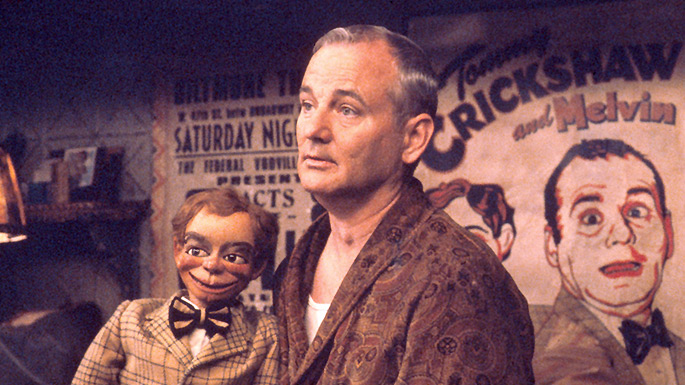
Tim Robbin’s masterfully written, star studded recreation of the eponymous Great Depression era agitprop play. Marc Blitzstein’s 1937 socialist musical, the first of its kind, tells the story of steel workers in Steeltown, USA who organize after World War I. Robbins weaves Blitzstein’s story in with those of Diego Rivera, Nelson Rockefeller, and Federal Theater Project director Hallie Flanagan, whose autobiography and HUAC transcripts provided much of the film’s dialog. And did I mention it has Bill Murray, Hank Azaria, Jack Black, John Cusack, Joan Cusack, Vanessa Redgrave, Cary Elwes, and John Turturro?
Matewan
One of John Sayles’ best films, and that’s saying quite a bit. Matewan depicts the “coal wars” of the 1920s in West Virginia, and he does so with a keen eye towards not only the murderous tactics of the coal company, but also by shedding light on the ways in which matters of race intersected the battle between capital and labor. The company brings in black and Italian workers via railroad, hoping to appeal to the xenophobia and bigotry of the local miners. I guess its unlikely that we will see the kind of violence depicted in Matewan show up in Madison, and thats definitely a good thing. But understanding the country's past labor battles, even if we do so through good film, might help put the right's new attacks on unions in some sort of perspective.
Film critics get paid a lot of money to see a lot of movies. One recent year, Peter Travers, movie critic for Rolling Stone, wrote that he watched more than 400 theatrical releases in 365 days. (He gave four stars to all of them, undoubtedly.) Here at Bareknuckle Vengeance, we’re too busy fighting the man to watch every movie that comes out. I haven’t seen Biutiful, or 127 Hours, or the King’s Speech, so I hesitate to make a “Best of” or “Top Ten” list. And I’m not going to waste the space here talking about how great the Social Network or Black Swan is, although I liked them both a lot, because you’re more likely to have seen them. But here are a few movies you might have missed:
El Secreto de Sus Ojos - This Argentinian film won the best Foreign Language Academy Award last year, but it was only distributed in the U.S. in 2010. It tells the story of an investigator who failed to crack a murder case and revisits it decades later, along with a relationship with his superior that fizzled out along with the case. You don’t need to know anything about Argentinian politics to enjoy the snaking storyline or the questions that the film raises about memory and trauma, and you won’t come away learning much about Argentina either. But El Secreto de Sus Ojos satisfyingly works on two levels; the decisions and attitudes of the film’s various characters are stand-ins for the varying stances on “truth and reconciliation” that wrenchingly played out on a national level after Argentina emerged from a dirty war prosecuted against its own people by the ruling military junta.
Machete - This movie should never have worked. But it does, incredibly. Modeled after the same Grindhouse pulp movies as was Robert Rodriguez’s prior film Planet Terror, Machete succeeds where that one failed chiefly because of its more straight-forward plot and likeable characters. It wears its politics on its sleeve, but perhaps its didactism is tempered by the sheer awesome ridiculousness of its violence. Who would have thought that a movie with so many has-been actors crammed in to the supporting cast -- including Cheech Marin, Don Johnson, Steven Seagal, Lindsay Lohan, Jeff Fahey and <cough cough> Robert DeNiro <cough cough> -- would have turned out so well?
Mother - The latest from Korean filmmaker Bong Joon-Ho, I think the less that I say about Mother’s plot the better. The film is at its heart about the unswerving loyalty of a mother towards her son, but twists in the story beg questions of the audience about how we understand the borders between right and wrong, hero and criminal, victim and victimizer. All of the characters have complex motivations, and none find solutions to the problems in their lives that don’t affect those around them. Like El Secreto de Sus Ojos, I believe this is actually a 2009 film that was released in the states in 2010. If you have Netflix, you can stream the movie now.
El Secreto de Sus Ojos - This Argentinian film won the best Foreign Language Academy Award last year, but it was only distributed in the U.S. in 2010. It tells the story of an investigator who failed to crack a murder case and revisits it decades later, along with a relationship with his superior that fizzled out along with the case. You don’t need to know anything about Argentinian politics to enjoy the snaking storyline or the questions that the film raises about memory and trauma, and you won’t come away learning much about Argentina either. But El Secreto de Sus Ojos satisfyingly works on two levels; the decisions and attitudes of the film’s various characters are stand-ins for the varying stances on “truth and reconciliation” that wrenchingly played out on a national level after Argentina emerged from a dirty war prosecuted against its own people by the ruling military junta.
Machete - This movie should never have worked. But it does, incredibly. Modeled after the same Grindhouse pulp movies as was Robert Rodriguez’s prior film Planet Terror, Machete succeeds where that one failed chiefly because of its more straight-forward plot and likeable characters. It wears its politics on its sleeve, but perhaps its didactism is tempered by the sheer awesome ridiculousness of its violence. Who would have thought that a movie with so many has-been actors crammed in to the supporting cast -- including Cheech Marin, Don Johnson, Steven Seagal, Lindsay Lohan, Jeff Fahey and <cough cough> Robert DeNiro <cough cough> -- would have turned out so well?
Mother - The latest from Korean filmmaker Bong Joon-Ho, I think the less that I say about Mother’s plot the better. The film is at its heart about the unswerving loyalty of a mother towards her son, but twists in the story beg questions of the audience about how we understand the borders between right and wrong, hero and criminal, victim and victimizer. All of the characters have complex motivations, and none find solutions to the problems in their lives that don’t affect those around them. Like El Secreto de Sus Ojos, I believe this is actually a 2009 film that was released in the states in 2010. If you have Netflix, you can stream the movie now.
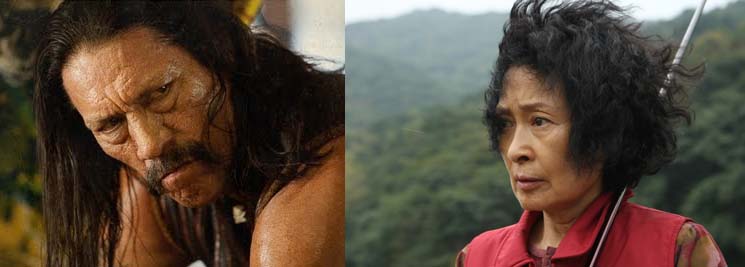
Machete vs. Mother: It would be a close fight.
Exit Through the Gift Shop - I’m still not sure if this is a fake documentary about a real artist, or a real documentary about a fake artist. But either way, I think the point of the film, which follows an amateur L.A. videographer turned street artist turned local art celebrity, is that there is no way to characterize art as “real” or “fake” anyways, that authenticity in modern art is constructed, and in turn, commodified. In that way, the film is similar to another documentary about art, My Kid Could Paint That. But whereas in that movie, the filmmakers studiously try to redraw the lines between fake and authentic even as they begin to crumble around their protagonist, Exit Through the Gift Shop is more carefree, letting the artists, whoever the hell they really are, have the last laugh.
The Kids Are Alright - Conservative L.A. Times columnist Jonah Goldberg recently celebrated the rise of the homosexual bourgeoisie as a sign of the decline of more radical leftist movements, and I think he would find much to like about The Kids Are Alright as emblematic of the phenomenon as he understands it. I guess that I too wrote about this, albeit from a more critical and speculative perspective, but I still like The Kids Are Alright, a movie about a lesbian couple with teenage children. Even if they all live in a magical crunchy granola bohemia-land, the characters are fleshed out and fallible in a refreshing way. The film is at turns hilarious and quite affecting.
If you added the budgets of these movies together, you might be halfway towards that of Inception. But I give you the Gyp the Blood guarantee: while these movies might be searching, messy, challenging, dark or violent, they are all well crafted, and certainly not boring. Instead of catching the next Transformers or Hangover sequel, you might think about watching these instead.
Bonus: Best Movies of 2009 That You Still Haven’t Seen: Moon and In the Loop - One is a comment on the commodification of human bodies written and directed by David Bowie’s son and consists of Sam Rockwell talking to himself for two hours. The other is the only movie about the 2003 invasion of Iraq to feature the dialog: “It'll be easy-peasy-lemon-squeezy.” “No, it won't. It'll be difficult-difficult-lemon-difficult.” Both are great. |
So, Bareknuckle readers, have you seen any of these? Any films that I missed?

During college, I took a course with a professor who asked us to come to her house, high above Portland, for Passover. While a few of us climbed the Columbia River Valley in a rickety station wagon, one of my classmates warned the rest of us that her husband was something of a “barbarian”: “you half expect him to be ripping into a mutton chop while he’s talking to you,” he explained.
The description turned out to be a bit overdramatic, but the husband was nonetheless a rather intense thickly-bearded figure who suddenly engaged us in a heated debate about the impending peril of Islamic terrorism in the United States. He convinced none of us, of course, but concluded his remarks with the ominous suggestion that once someone blew up Pioneer Square in downtown Portland, we would all change our tune.
We scoffed at the notion, of course. For anyone unfamiliar with Portland, I once ate a sandwich in Pioneer Square with someone behind me playing an acoustic version of “Sexual Healing” while two teenage girls made out in front of a sign-wearing preacher shouting about the evils of homosexuality while being shadowboxed by a homeless person who was standing immediately to the left of a goth kid playing the kazoo and doing a jig. So, really, who would bother scheming to blow up a place normally trafficked by hackysack hippies and pitbull-carrying drifters?
 |
| Like this. |
The description turned out to be a bit overdramatic, but the husband was nonetheless a rather intense thickly-bearded figure who suddenly engaged us in a heated debate about the impending peril of Islamic terrorism in the United States. He convinced none of us, of course, but concluded his remarks with the ominous suggestion that once someone blew up Pioneer Square in downtown Portland, we would all change our tune.
We scoffed at the notion, of course. For anyone unfamiliar with Portland, I once ate a sandwich in Pioneer Square with someone behind me playing an acoustic version of “Sexual Healing” while two teenage girls made out in front of a sign-wearing preacher shouting about the evils of homosexuality while being shadowboxed by a homeless person who was standing immediately to the left of a goth kid playing the kazoo and doing a jig. So, really, who would bother scheming to blow up a place normally trafficked by hackysack hippies and pitbull-carrying drifters?
Well, someone just did. But I’m not sure whether it was Mohamed Mohamud or the FBI.
Mohamud, a 19-year-old Somali-American and Oregon State student, was arrested by the FBI on Friday for allegedly plotting to set off a car bomb at the annual Christmas tree-lighting ceremony in Pioneer Square. (Which brings up the most surprising aspect of this entire story: thousands of people attend a tree lighting ceremony in the heathen Portland?). According to the feds, Mohamud had a stated desire to harm women and children and attempted to remotely detonate a car bomb during the ceremony. He was subsequently taken into custody, kicking and screaming, and shouting “Allahu akbar.” So, violent terrorist thwarted, point to the feds, right?
Well, maybe—but not so fast. Glen Greenwald suggests in Salon, I think rather convincingly, that there is cause for more skepticism regarding the facts of the case and it seems altogether possible that “the FBI -- as they've done many times in the past -- found some very young, impressionable, disaffected, hapless, aimless, inept loner; created a plot it then persuaded/manipulated/entrapped him to join, essentially turning him into a Terrorist; and then patted itself on the back once it arrested him for having thwarted a ‘Terrorist plot’ which, from start to finish, was entirely the FBI's own concoction.”
I certainly have no interest in defending Mohamud who, when given the means, legitimately thought he was detonating a bomb that would obliterate two blocks and potentially kill thousands of Portlanders. He is clearly a warped individual and an attempted terrorist. But it does seem worth asking not only whether Mohamud would have posed any kind of legitimate threat without the help and prodding of the feds, but also the extent to which the FBI simply created a terrorist out of a disaffected teenager filled only with delusional fantasies and bluster until he was given the means to carry them out by the government. The circumstances of the case, I think, bring further into question whether the methods the FBI uses are actually protecting the United States from legitimate terror threats or simply concocting them in a self-perpetuating cycle.
From news reports probing Mohamud’s background, it seems clear that he was an impressionable and disaffected—probably mentally unstable—teenager who had become emotionally troubled after the divorce of his parents. The FBI, in fact, only began to monitor Mohamud after his father, an engineer at Intel, contacted them that he was concerned about his son’s growing extremism. Mohamud was, it seems, in many ways just a troubled teen who involved himself not only in fantasies of violence, but also in sex, alcohol, and partying at Oregon State. But if his father turned to the FBI for some sort of intervention or help, he was obviously mistaken, as it would instead result in a sting operation that further encouraged his son toward terrorism.
According to the FBI affidavit, the sting began in earnest when the feds intercepted a seemingly innocuous email exchange between Mohamud and a man living in the northwest frontier province of Pakistan, which was suspicious solely because it is a region where “Islamic militants frequently reside.” The December 3 email read: "salamz bro. it's me, i made it 2 OMRA, [praise be to god] if u wanna come, theres a bro that will contact you about the proper paperwork u need 2 come... i cant go online 4 a while,, i hope 2 see u soon"
Although “OMRA” would typically refer to a pilgrimage in Mecca, the agent concluded that they must be speaking “in code to avoid detection,” and that the above email was therefore an invitation for Mohamud to join in terrorist activities. Mohamud then replied to the email that “yes that would be wonderful, just tell me what I need to do [God willing]. always wanted to see the ka’bah.” But Mohamud hit a dead end when his attempts to contact another party that would help him reach Mecca/Pakistan fell through. So he secured a fishing job in Alaska—but he was prevented from boarding his flight, because he had been placed on the “No Fly List.”
Instead, an undercover FBI agent contacted Mohamud and arranged a meeting where he was asked what he would be willing to do “for the cause.” Thus, at this point the FBI had been tipped off by a concerned father looking to help his unstable son filled with bluster and impotent rage, saw him discussing a visit to either Mecca or Pakistan, found him too incompetent or disengaged to follow through even with that, but now surrounded him with a “friend” who further pushed him toward jihad.
Given a variety of choices on how to help “the cause,” Mohamud expressed interest in becoming “operational” and, after being instructed to think of a target, suggested Pioneer Square in Portland. The undercover officer offered him praise, saying that “he loved his idea.” The agents then helped him plan the attack (saying that they “were impressed” with his work), gave him money to buy materials for bombs and to pay his rent, and actually built a bomb for him. After a test of an actual functioning bomb on November 4, they filmed a written statement in which explained his reasoning, and eventually helped him to detonate a fake bomb on the 26th. As Greenwald sums: “he had no history of violence, no apparent criminal record, had never been to a training camp in Afghanistan, Pakistan or anywhere else, and -- before meeting the FBI -- had never taken a single step toward harming anyone. Does that sound like some menacing sleeper Terrorist to you?”
Yet, the U.S. attorney in Oregon suggested that "this defendant's chilling determination is a stark reminder that there are people -- even here in Oregon -- who are determined to kill Americans,” while the FBI suggested a statement released by the Department of Justice that even though the bomb was fake “the threat was very real.” But was the threat “very real” until the FBI became involved?
The methods used by the FBI in this case closely mirror those used in numerous others, including the arrest of the “Newburgh Four” in 2009, accused of plotting to bomb New York synagogues. In that case, as Ted Conover explains in Slate, the FBI informant offered congregants of the local mosque $25,000 and other gifts if they would help him pursue jihad. The four unemployed and impoverished ex-cons, one of which was described as a paranoid schizophrenic who collected his urine in jars, were seduced in this case entirely by an offer of $250,000 and a BMW—the informant himself wrote that the men were participating “for the money. … They're not even thinking about the cause.”
Beyond legal questions of entrapment, the actual utility of invading often impoverished ethnic communities with promises of money in exchange for committing acts of terrorism seems, at best questionable. One ex-FBI agent and terrorism expert complained to Businessweek: “We’re interested in catching terrorists, not people who have mental problems and wonder what it would be like to blow up the Sears tower but they can’t get out of bed in the morning.”
In fact, the circumstances surrounding the Mohamud case immediately reminded me of the Indian-born British salesman Hemant Lakhani, who was convicted of providing material support to terrorists when he sold a stinger missile to the FBI. As Petra Bartosiewicz explained on This American Life, however, Lakhani was an “amazingly incompetent illegal arms dealer” and a “lair, shameless braggart, and a snob” who not only claimed to the FBI that he could obtain a missile, but equally improbably that he could secure a submarine and plutonium. When Lakhani proved unable to supply the FBI informant with the missile he guaranteed, the government actually provided the missile to him so that he could sell it back to the FBI. Lakhani was not so much a terrorist-in-waiting as he was an immoral liar with a pathological need to be liked who was provided by the FBI with both the means and motive to commit an act he had no philosophical commitment to.
Conover suggests this strategy is like “sending lots of little devils out into Muslim communities and getting them to sit on people's shoulders and whisper in their ears” and points out that there is no shortage of disturbed (or even seemingly normal) Americans who could be convinced to commit violent crimes given enough enticement. The government would certainly have its hands full if it conducted a sting operation of every teenage boy with violent fantasies and a willingness to act upon them if given encouragement, rewards, and means. So it is worth asking whether the government’s tactics actually do anything to prevent actual terrorism or whether it simply allows them first to create, and then to chase, ghosts—thereby inflating the perceived risk of terror.
Meanwhile, the Corvallis mosque attended by Mohamud was firebombed by an arsonist. Greenwald concludes: "So the FBI did not stop any actual Terrorist plots, but they may have helped inspire one."
Greetings from the land of orange groves asphalt.
I’m in Los Angeles for a while and thought I would write about it. But every time I tried, I ended up with a diatribe on my screen, a vicious rant that made it appear as though I was living in a cesspool. It’s too easy to pick on Los Angeles; there’s smog, sprawl, and movie stars. So, because I don’t want to appear too cranky, I’m going to try to write a blog post about what I like about LA.
First, the weather is pretty great. It rains rarely. (Just don’t ask where LA’s water comes from.) This Thanksgiving week, the metro area is experiencing what newsmen are calling an “arctic blast.” I’d better put on a sweater.
Second, the people I’ve talked to are all very nice and interesting. I met about 10 history graduate students from UCLA last weekend, and I was really surprised that they didn’t all talk like surfers. They were generous with their beer and their microwave tacos.
(Speaking of tacos, they’re very good around the area where I’m staying. I’m living on the western edge of Culver City, where there are about 20 taquerías within a block radius. And the grocery store that I can walk to has fresh tamales.)
I’ve spoken with some interesting people riding the bus around LA’s west side. One guy told me about how when he sees young women on the street he wants to squeeze their boobs and imagines himself in porno movies with them. He was making hand gestures similar to Charlie Chaplin’s in Modern Times, when the tramp screws bolts for too long. How nice of him to share his thoughts with a stranger, right?
I had another interesting conversation with a guy who worked in Westwood, and was riding the bus because his car had been stolen. When he realized that he got on the wrong bus, halfway to Santa Monica, he got up and spoke to the bus driver, returned to his seat, and started complaining about how rude bus drivers are. I told him its probably because their job sucked. He told me that they were ignorant if they couldn’t get another job. I told him he was an asshole and that he was full of shit.
He stopped being so friendly after that. We still chatted though. What if instead of tossing off the idea of mass transit in LA, I asked him, people got serious about supporting sustainable and efficient modes of transportation? Maybe then we’d have a better appreciation for public transportation, bus drivers included.
You’re right, he said. It’s true. But I’m just here because my car was stolen. I can’t wait to get my car back.
I think what surprises me the most here is that in any other city that I’ve lived, drivers always let a bus in if its changing lanes or merging. We had a saying in Massachusetts: “Don’t fuck with the buses.” In Los Angeles, drivers never yield to a bus. (Maybe China has the right idea here, with an elevated bus that straddles the traffic.)
Los Angeles does invest a lot of money into its public transit, which covers the county with a fairly dense network of bus routes and subway lines. Fares are relatively cheap, compared to other cities. And a lot of people take advantage of it. If even more people did, maybe traffic wouldn’t be so bad. Maybe the city would be more successful in adopting smarter plans for further growth. It won’t turn into Vancouver overnight, but city planners could do much more to encourage bike commuting, car sharing, and more dense, mixed use development.
And maybe people, like that guy whose car was stolen, would be a little less ignorant. Lewis Mumford once wrote that a city should be designed as a stage upon which social theater is performed. If Los Angeles is a stage, perhaps the performance is that of a symphony, because there sure is a lot of noise in the city, and its mostly honking cars. (If a symphony, it is cacophonous and atonal, and not in a cool Ornette Coleman sort of way.) Soon that guy will join them, idling on the 405, spewing sulfur into the air.
OK, I’ll stop. I think the problem with picking on the city is that it posits Los Angeles as exceptional. In truth, the same critiques that we levy against Los Angeles can be thrown at many other cities in the US. They’re mostly designed in a way that promotes segregation and a passive, materialistic citizenry. At least Los Angeles has In-N-Out Burger.
Los Angeles is exceptional in one way, which brings me to the third thing that I like. Single stream recycling! It’s crazy! You put glass, plastic, paper and cardboard in one big pail! And you can even put plastic grocery bags in too!
In conclusion, I know that I need to include more photos in my blog posts. Here’s a picture of a two legged chihuahua that was on the LA evening news tonight.
PS - I just began reading Josh Sides’s book on the history of race in L.A. Maybe next week I will return to talk about it. Until then, I will simply suggest that you view Who Framed Roger Rabbit?, a film that offers a sly but pointed critique of mid-century urban policy as it relates to race in Los Angeles.
I’m in Los Angeles for a while and thought I would write about it. But every time I tried, I ended up with a diatribe on my screen, a vicious rant that made it appear as though I was living in a cesspool. It’s too easy to pick on Los Angeles; there’s smog, sprawl, and movie stars. So, because I don’t want to appear too cranky, I’m going to try to write a blog post about what I like about LA.
First, the weather is pretty great. It rains rarely. (Just don’t ask where LA’s water comes from.) This Thanksgiving week, the metro area is experiencing what newsmen are calling an “arctic blast.” I’d better put on a sweater.
Second, the people I’ve talked to are all very nice and interesting. I met about 10 history graduate students from UCLA last weekend, and I was really surprised that they didn’t all talk like surfers. They were generous with their beer and their microwave tacos.
(Speaking of tacos, they’re very good around the area where I’m staying. I’m living on the western edge of Culver City, where there are about 20 taquerías within a block radius. And the grocery store that I can walk to has fresh tamales.)
I’ve spoken with some interesting people riding the bus around LA’s west side. One guy told me about how when he sees young women on the street he wants to squeeze their boobs and imagines himself in porno movies with them. He was making hand gestures similar to Charlie Chaplin’s in Modern Times, when the tramp screws bolts for too long. How nice of him to share his thoughts with a stranger, right?
I had another interesting conversation with a guy who worked in Westwood, and was riding the bus because his car had been stolen. When he realized that he got on the wrong bus, halfway to Santa Monica, he got up and spoke to the bus driver, returned to his seat, and started complaining about how rude bus drivers are. I told him its probably because their job sucked. He told me that they were ignorant if they couldn’t get another job. I told him he was an asshole and that he was full of shit.
He stopped being so friendly after that. We still chatted though. What if instead of tossing off the idea of mass transit in LA, I asked him, people got serious about supporting sustainable and efficient modes of transportation? Maybe then we’d have a better appreciation for public transportation, bus drivers included.
You’re right, he said. It’s true. But I’m just here because my car was stolen. I can’t wait to get my car back.
I think what surprises me the most here is that in any other city that I’ve lived, drivers always let a bus in if its changing lanes or merging. We had a saying in Massachusetts: “Don’t fuck with the buses.” In Los Angeles, drivers never yield to a bus. (Maybe China has the right idea here, with an elevated bus that straddles the traffic.)
Los Angeles does invest a lot of money into its public transit, which covers the county with a fairly dense network of bus routes and subway lines. Fares are relatively cheap, compared to other cities. And a lot of people take advantage of it. If even more people did, maybe traffic wouldn’t be so bad. Maybe the city would be more successful in adopting smarter plans for further growth. It won’t turn into Vancouver overnight, but city planners could do much more to encourage bike commuting, car sharing, and more dense, mixed use development.
And maybe people, like that guy whose car was stolen, would be a little less ignorant. Lewis Mumford once wrote that a city should be designed as a stage upon which social theater is performed. If Los Angeles is a stage, perhaps the performance is that of a symphony, because there sure is a lot of noise in the city, and its mostly honking cars. (If a symphony, it is cacophonous and atonal, and not in a cool Ornette Coleman sort of way.) Soon that guy will join them, idling on the 405, spewing sulfur into the air.
OK, I’ll stop. I think the problem with picking on the city is that it posits Los Angeles as exceptional. In truth, the same critiques that we levy against Los Angeles can be thrown at many other cities in the US. They’re mostly designed in a way that promotes segregation and a passive, materialistic citizenry. At least Los Angeles has In-N-Out Burger.
Los Angeles is exceptional in one way, which brings me to the third thing that I like. Single stream recycling! It’s crazy! You put glass, plastic, paper and cardboard in one big pail! And you can even put plastic grocery bags in too!
In conclusion, I know that I need to include more photos in my blog posts. Here’s a picture of a two legged chihuahua that was on the LA evening news tonight.
PS - I just began reading Josh Sides’s book on the history of race in L.A. Maybe next week I will return to talk about it. Until then, I will simply suggest that you view Who Framed Roger Rabbit?, a film that offers a sly but pointed critique of mid-century urban policy as it relates to race in Los Angeles.

Many years ago, a brilliant kindergarten teacher asked her students to dictate recipes for their favorite dishes. A friend of mine happened to be in that class. As you can see, the children’s parents had some poor, to say the least, eating habits. At least it helps explain why my generation is so fat:
Barbecue Chicken: You take some chicken and then you take some barbecue sauce and you put it on the stove in a pan. That’s all. Cook for ten seconds.
Banana Pudding: Add in some whooped cream and stir it. Then kind of put some water inside and then mix it two times. That’s all.
Bean Burritos: You buy them first. Of course you do that. You take them out of the package. You put em in the microwave, if you have one. If you don’t, then you can’t make any. You push one, then zero-zero (I don’t know what that means). Then you take it out. Then turn it around. Then push one-zero-zero again. Then take it out and put cheese on it. Put it back in. Push two-zero-zero. Take it out. Then you eat it. But don’t burn your tongue.
Cheetos: First you gotta put cheese. Then you put it inside the stove. Wait. Then you take it out and eat it.
Pancakes: Use special oil, but I don’t know what it’s called. You take this, sort of like dip, and scoop it up and then dump it onto this pancake maker and then the pancake comes.
Taco Bells: You can put the thing in the microwave. When it’s all done you can put tomatoes, lettuce and cheese. Then you can have it.
Breakfast Thing: Take bread, you take an egg and boil it. Then you cut a hole out of the bread. Then you put the egg inside the hole. That’s all.
Steak: You kill a cow and get the meat out of it. Then you put some stuff on it (if you want). Then put it in the oven.
“S” on a Shingle: You make it with potatoes and hamburger. You get potatoes there first. Then you put hamburger on top of it. Then you can put corn on top if you want.
Salad: You put some cheese in it and then you put those green things. Then you put the whatever it was called (the stuff you dump on). You have those little seeds that you can eat.
Enchiladas: You make it with two eggs. Put some dough. You gotta put ice in. Stir it up. Then you gotta keep mixing it up. The you gotta put it into the oven. Then you take it out. Then you wait ‘til it gets cold. Next you gotta stir again to make sure it’s right.
Cheese Sandwiches: I make these all the time for my Mom. Mayonnaise, cheese, and bread. Two pieces of cheese and mayonnaise on both sides of the bread. Then salad. Then you put ‘em together. Then you eat.
Salad: You put lettuce inside the bowl. Then you put “proutons” on it. Then you put… what is that stuff you put on top of it?
Tomato Soup: I love tomato soup. You squeeze tomato juice in a bowl. Then we put crackers in it.
Pancakes: Flour, salt… and I can’t think of the rest. And then you put it on a plate and set it on the table.
Baloney Sandwich: You take two pieces of bread and put baloney on it and white stuff and cheese. Then you put another piece of bread on. That’s all.
Macaroni: You boil it and you put em in. Then you watch T.V. or something. Then you put butter and the orange stuff in. Then it’s done.
I hope that teacher understands how brilliant the cookbook really is. I would really like to see a series of YouTube videos in which people honestly try to follow these recipes. Get on it people.
Here at Bareknuckle Vengeance, we're taking a brief break from changing the world by complaining mightily about how everyone and everything sucks in order to review some of the cuisine at this year's Minnesota State Fair. Taking pictures of insane fatty foods, it seems, is a prerequisite for anyone attending the fair with the advent of the "new media" and who am I to buck that trend?
For those unfamiliar with the "Great Minnesota Get Together," it is a bizarre amalgam of fried foods on a stick, nerdy children and old women growing stuff for prizes, enormous farm animals with deep existential pain in their oversized eyes, fanny packs, and unbelievably obese people. It is possibly the only place in the world where you can buy a funnel cake, drink all the milk you can drink, and watch a calf being born all within 20 yards of each other. It is certainly the only place where you could possibly want to do that.
Cheese Curds from The Mouth Trap
Outsiders to the Midwest always seem shocked by the very notion of cheese curds. Some have even refused to believe that they exist, thus proving themselves unfamiliar with the longstanding Midwestern tradition of submerging everything remotely edible into a vat of hot oil prior to consumption. Cheese curds are readily available at nearly every rinky-dink fair or carnival in the Upper Midwest, but for the uninitiated, they are small chunks of mild cheddar cheese that form as a byproduct of separating whey from milk. Fresh cheese curds are often claimed to “squeak” when bitten, with suggests a level of sentience that would be rather horrifying if it were true. What is definitely true: upon deep-frying, cheese curds become quite possibly the saltiest single food item known to man. Honestly I don’t know why poutine wouldn’t catch on at the State Fair—you could call the stand “Raspoutine!” (B-)
Deep Fried Cheeseburger
There are two kinds of people in this world: those for whom a deep-fried cheeseburger sounds like a divine miracle to be washed down with a warm glass of deep-fried beer and those for whom it sounds like a particularly effective emetic. What is clear is that there nothing remotely attractive about this monstrosity. Served on a skewer with a pickle slice, the deep-fried cheeseburger is essentially a meat patty and slice of American cheese covered in a thick dough and fried into an oblong ball that is literally sweating grease. Ours also held something distinctly green, which I am just going to hope (or at least pretend) was a pickle. Ultimately, it tastes pretty much like an enormous meaty cheese curd and so long as you don’t look at it (even out of the corner of your eye—don’t), it’s edible (B).
Tater Tot Hot Dish On-a-Stick
"Hot Dish" is a Minnesotan word that translates roughly into "casserole," but more accurately connotes a dish containing excess starch, meat, a canned vegetable, and some sort of soup as a binding agent (generally cream of mushroom) that is all baked into the very definition of bland.
The "Big Fat Bacon"
I can think of only two ways to describe the "Big Fat Bacon."
Pot Roast Sundae
For those of you aching for a side of meat sauce with your meat and meat a la mode for dessert, the pot roast sundae makes your dreams come true: mashed potatoes covered in beef gravy, roast beef, corn, and a cherry tomato on top, all made to resemble an ice cream sundae. Although it may conjure unfortunate comparisons to KFC’s “I’ll have the entire left side of the menu in a” bowl, the pot roast sundae is actually remarkably tasty and (for the state fair) subtle. Does it look like an ice cream sundae? Let's hope not. But it tastes like a hearty winter meal in a bowl. (A)
Pickle Sickle
Fry Dog
Have you ever sat down late at night with a hot dog and a plate of french fries and thought "ugh, what a chore!" if only there was a way to mash the fries onto the hot dog and eat them together like some unholy sandwich. No? ... uh, me neither. Pointless? You bet. Delicious? Oh yeah. (A-).
For those unfamiliar with the "Great Minnesota Get Together," it is a bizarre amalgam of fried foods on a stick, nerdy children and old women growing stuff for prizes, enormous farm animals with deep existential pain in their oversized eyes, fanny packs, and unbelievably obese people. It is possibly the only place in the world where you can buy a funnel cake, drink all the milk you can drink, and watch a calf being born all within 20 yards of each other. It is certainly the only place where you could possibly want to do that.
Cheese Curds from The Mouth Trap
 |
| Fried Cheese Curds (Source) |
Deep Fried Cheeseburger
 |
| Deep Fried Cheeseburger (Source) |
 |
| Tater Tot Hot Dish On-a-Stick (source) |
 |
| Big Fat Bacon (source) |
Pot Roast Sundae
Pickle Sickle
 |
| Pickle Sickle (source) |
DEAR GOD. This is quite possibly the single vilest concoction I have ever consumed. It is quite simply pickle juice frozen to resemble an Otter Pop, which means it replaces cheese curds as the saltiest food item ever created. Four people tried it, four people nearly retched. Trying to finish one is a YouTube meme waiting to happen (F).
Fry Dog
 |
| Fry Dog (Source) |
Have you ever sat down late at night with a hot dog and a plate of french fries and thought "ugh, what a chore!" if only there was a way to mash the fries onto the hot dog and eat them together like some unholy sandwich. No? ... uh, me neither. Pointless? You bet. Delicious? Oh yeah. (A-).
Also tried:
“Ghost” Wings: A specialty of a the Girvan Grille in Brooklyn Park, the sauce for these wings is supposed to be made with the Bhut jolokia pepper (known as the “ghost” chili), which is the hottest in the world. At the State Fair, however, they were merely made with habanera peppers, making them significantly less formidable. They have a nice citrusy taste, but they weren’t particularly hot (B+)
Deep Fried Twinkie: just a giant doughy ball of mush. Needs some sort of texture. (C-)
Korean BBQ Chicken Tacos: Mexican-Korean fusion is a new trend in food carts on the West Coast and is a pretty excellent idea in my experience, but these were mostly just Tex-Mex tacos—pico de gallo instead of gochujang, chicken instead of bulgogi (B).
Pig Licker: Frozen chocolate-covered bacon. You can really convince yourself this is a good idea. “Well the bacon is salty and the chocolate is sweet, and salty sweet is always good. Plus bacon and chocolate, how can it go wrong”? Disastrously. It begins with a very cold chocolate taste and finishes with an overpowering unbelievable wave of salt. Plus, the cold gives it an unpleasant texture and mouth-feel. (D)
 |
| Pig Licker (source) |
Missed this year:
Camel on-a-stick (sold out)
Sweet Potato Tater Tots
Danny Boy Burger (corned beef, sauerkraut, Swiss cheese)
Grilled Marshmallow, Chocolate, and Banana Sandwich
Will never:
Chicken-fried bacon
Peanut butter hot dog with banana and bacon
Corndog pizza

You can probably name dozens of absolutely terrible, completely unlistenable songs. Richard Harris’ rousing rendition of “MacArthur Park” is the classic example, of course. “Blue (Da Ba Dee)" or “Barbie Girl” come to mind… the entire Journey catalogue (yeah, I said it). But forget about it--that's not what this is about. It’s not like anyone ever actually liked “Popozao” by Kevin Federline. Everyone already knows Nickelback and Ke$ha are hacks. And there are probably already twelve VH1 specials devoted to the “most awesomest lame” songs ever.
On the other hand, indie music (of which I am an unashamed fan) also has its less-discussed share of excruciating garbage. But that doesn’t necessarily stop the purple prose of Pitchfork or your PBR-swilling hipster friend from gobbling it up like grad students and bread scraps. So let's get the ball rolling on this overlooked phenomenon with five awful songs by indie darlings as rated by our panel of hipsters:
Terrible Angels by CocoRosie
I’m already kind of cheating here since CocoRosie isn’t exactly an indie “darling.” But then again, Pitchfork gave this album a 6.9 (whatever the fuck that means), so I’m running with it. The song begins with a slow, descending chord progression under what a friend referred to as the sound of a “pig being repeatedly castrated.” And it all goes downhill from there, devolving into a jumbled hodge-podge of affected cutesy voices, piercing electronic noises, and obnoxious dissonant harmonies sung with all the precision and grace of a tap-dancing Clydesdale.
Hilarious deluded YouTube comment: “Terrible imo? It's obvious that you don't know nothing about music. I cannot understand people like you that come up with this comments. They are great musicians and I once saw them too in Lisbon... It was A M A Z I N G.”
Most Cringe Inducing Section: 0:47-1:04. A mumbly crescendo of meandering harmonies into a full measure of nasal meowing followed by… OH GOD NOT THE PIG AGAIN!
Hipsters Give It:

Peach, Plum, and Pear by Joanna Newsom
Joanna Newsom plays the harp, which has 47 strings and is typically tuned to C-flat major, so I guess that's pretty impressive. And her songwriting isn't really that bad. The problem, unfortunately, is that she sings like Lisa Simpson on helium. Nowhere is it more overbearing than on “Peach, Plum, Pear,” for which the production process evidently went “Hey Joanna, this Lisa Simpson on helium thing is great, but you know what would be even better? FIFTY Lisa Simpsons on helium. Yeah, that'd sound real good.”
Hilarious deluded YouTube comment: “it's disgusting you don't know what cerebral palsy is. cerebral palsy is caused by damage to the motor control centers of the developing brain and can occur during pregnancy, during childbirth or after birth up to about age three. genetics has nothing to do with it.” Wait, what? Goddamn YouTube comments.
Most Cringe Inducing Section: 2:25-2:29. “You know what would be better than fifty Lisa Simpsons on helium? If they all of a sudden dropped the whole unison thing and just went nuts. Yeah, that's the ticket."
Hipsters Give It:
Lost Blues by Palace Brothers (Will Oldham, aka Bonnie ‘Prince’ Billy)
As the maker of the above video demonstrates in his picture selection, Will Oldham has a massive bushy beard and a stellar collection of vests. While not the greatest vocalist in the world, he is generally passable—particularly within the indie world, where simply droning in a monotone voice is the standard, mimicking Ben Gibbard’s obnoxious vocal sylings is a recipe for success, yelling everything like a stocktrader with a hearing impairment is totally cool, and belting out tunes like you’re perpetually constipated will make you the most acclaimed artist of the decade. In “Lost Blues” however, Oldham completely loses his shit.
Hilarious deluded YouTube comment: “I would like to make my own video on this song :-) it's so inspiring!”
Most Cringe Inducing Section: 2:31-3:29. Tough call here, but when he starts dragging someone else into this mess, it borders on assault. This one-minute is basically a microcosm of the entire list: people trampling on each others’ words and melodies, mumbling, terrible singing, unnecessary yelling… it goes on.
Hipsters Give It:

My Rollercoaster by Kimya Dawson
Kimya Dawson was half of the anti-folk duo The Moldy Peaches (whose song “Whose Got the Crack” narrowly misses this list), and she received significant fanfare for her contributions to the soundtrack of the movie Juno. The success of the soundtrack, as you may remember, led Comcast to create a series of bizarre commercials mimicking her breathless, monotone singing style. It was an odd ad campaign, because unless Comcast was offering a free case of tight jeans or a useless liberal arts degree with the cable hookup, I don't think the hipsters were listening. “My Rollercoaster,” in addition to seemingly pointless intertextuality and a general tunelessness, ends with a cacophony of sound that would make Phil Spector recoil in horror.
Hilarious deluded YouTube comment: “this is pure awesomeness. I want to be like that and I think I’ll go search for that person inside me.”
Most Cringe Inducing Section: 3:30-3:54. Why? That’s all I want to know. From the apparent decision to turn a bar full of drunks into a chorus to the strained operatic final note—just...why?
Hipsters Give It:
It’s Cool, We Can Still Be Friends by Bright Eyes
Conor Oberst has a facebook page dedicated to him entitled “Conor Oberst is Our Generation’s Bob Dylan” and more than one professional reviewer has made the comparison as well. At age 22, Bob Dylan wrote perhaps the defining song of 1960s zeitgeist, “Blowin’ in the Wind.” Oberst writes here about how he’s ‘bout to get “so fuckin’ drunk” in a song so lugubrious it would make Wagner roll his eyes (yeah, I just used the same joke construction, whatever). But I will say that this song hits a trifecta of terrible lyrics, awful singing, and dreadful musicianship that no other song on this list can match.
Hilarious deluded YouTube comment: “the best singer and songwriter in new age, he's voice is so emotional and amazing, and his words to his make mor sence than everything ive ever heard!”
Most Cringe Inducing Section: 4:54-5:30. I don’t think laughing is the intended reaction here, but it happens every time.
Hipsters Give It:


 Posts
Posts


